
Natural gas prices in Asia and Europe have surged since the Iran conflict escalated, while U.S. Henry Hub prices remain comparatively low. For ethane-fed crackers clustered along the Mississippi River between Baton Rouge and New Orleans, that divergence isn't a footnote. It's a structural pricing advantage that is already reshaping investment decisions and tightening industrial support space in Ascension Parish.
Geismar sits at the center of this story. Plants like Shintech, Dow, Westlake, and CF Industries draw on domestically produced ethane and natural gas: feedstocks priced in U.S. markets, not Persian Gulf shipping lanes. When conflict disrupts naphtha-based cracking in Asia or drives up pipeline gas costs in Europe, Louisiana's cost position improves on a relative basis without anything changing at the plant gate. The war didn't create this advantage. It amplified it.
For industrial tenants, investors, and logistics directors operating in this corridor, the question isn't whether the geopolitical backdrop is favorable. It is. The question is what it means for space demand, lease rates, and capital deployment decisions over the next 18 to 36 months.
Louisiana's $100 Billion Moment: What It Means for Space
Louisiana was already experiencing what analysts are calling a historic industrial investment cycle before the Iran conflict began. Louisiana Economic Development has tracked a surge in private-sector commitments (AI data centers, steel production, LNG infrastructure, microchip manufacturing, and shipbuilding) that collectively represent approximately $100 billion in capital investment flowing into the state.
Reshoring is a real driver here, not a talking point. An expert cited in Newsweek specifically named Louisiana alongside South Carolina, Alabama, and Mississippi as states benefiting from supply chain restructuring forced by tariff exposure and geopolitical risk. Louisiana Economic Development has linked 7,800 reshored positions to investments from companies including Hyundai Motor Group, Shell Catalysts & Technologies, Syrah Resources, and Intralox, among others.
That capital doesn't arrive in a vacuum. It arrives with contractor mobilizations, material staging requirements, equipment storage needs, and temporary workforce infrastructure. All of which translate directly into demand for industrial warehouse space and IOS yards in the Geismar corridor.
IOS and Warehouse Demand: Absorption Is Happening Here
Nationally, the industrial market is working through a supply correction. Vacancy hit 9.6% in early 2025, up 160 basis points since January. Net absorption went briefly negative in Q2 2025 (the first time since 2010) before returning to modest positive territory in Q3 at roughly 13.3 million SF. Analysts at MMCG project vacancy to crest near 8% by early 2026 before declining as construction moderates.
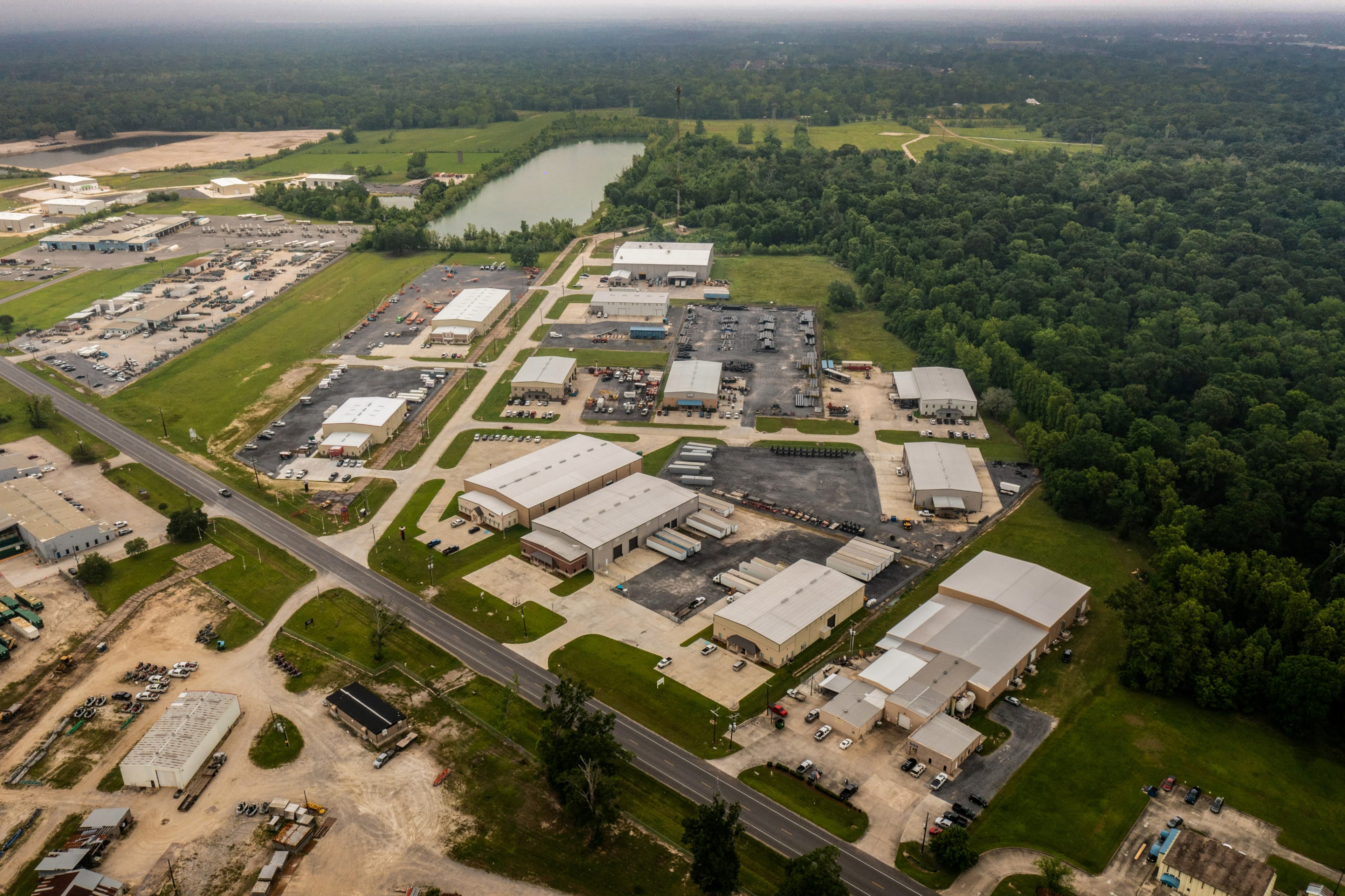
But the Baton Rouge and Geismar submarket doesn't track with national averages. It never has. Vacancy here has historically run below the national mean, and speculative development has been structurally limited. When space gets built in this corridor, it tends to get leased, typically to a single user, often on a build-to-suit basis. That dynamic hasn't changed. Recent transactions confirm it: a 9,000 SF lease to Sapphire Steel International closed in Geismar in Q3 2024, with deal activity continuing across the corridor.
New lease spreads nationally show rents averaging $10.07 per square foot over the last 12 months, $1.17 above in-place rents. That spread is a signal that tenants moving into new space are paying more, even as broader market conditions give tenants leverage in overbuilt metros. In a supply-constrained submarket like Geismar, that leverage disappears quickly when plant activity picks up.
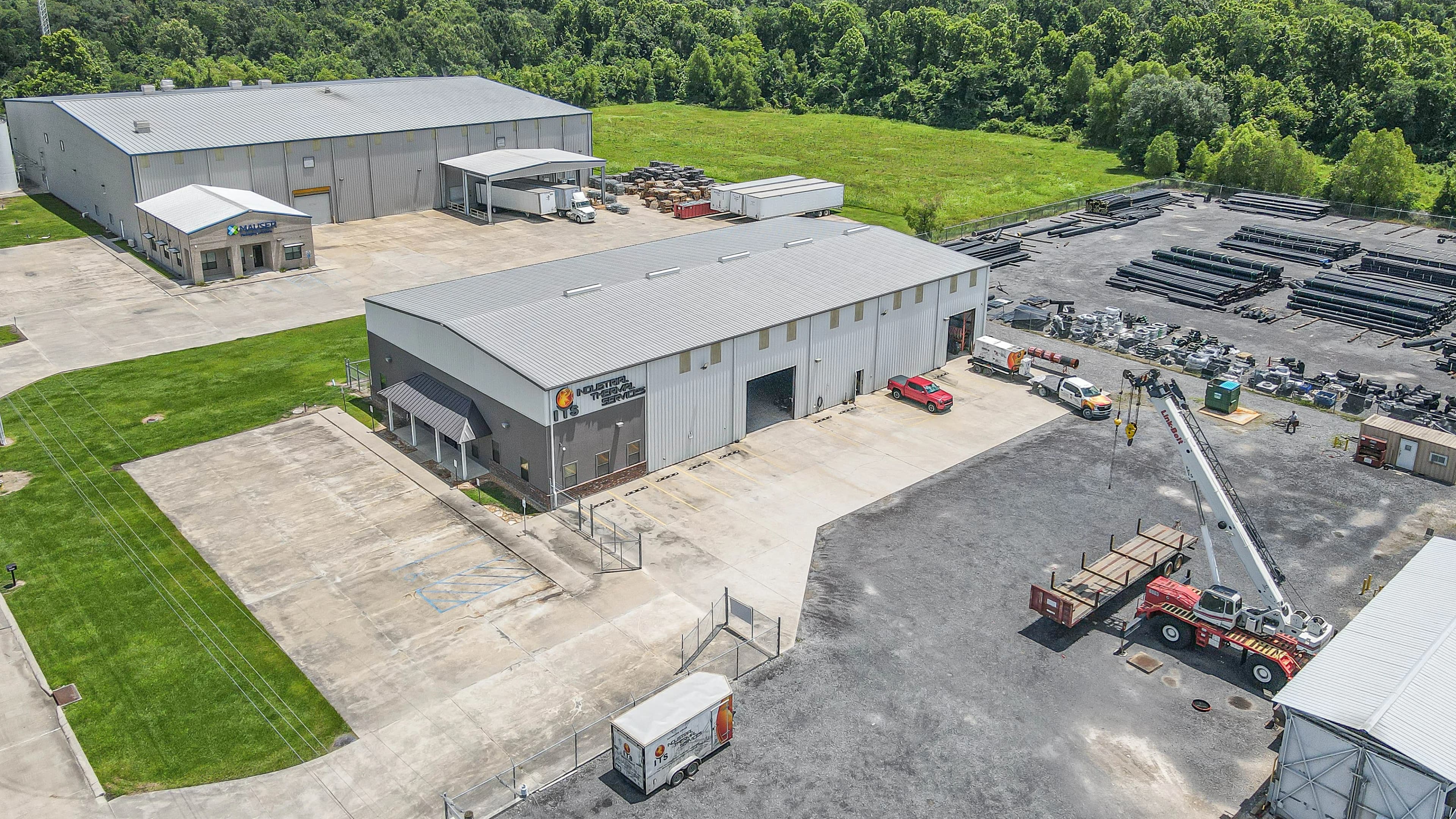
IOS yards (laydown, equipment staging, contractor support) remain the tightest segment of this market. They're also the hardest to replace. Permitted, paved, and well-located IOS acreage along Louisiana Highway 30 and Highway 73 is not a commodity. Permits take time. Infrastructure investment is significant. When a major turnaround cycle or capital expansion project hits multiple plants simultaneously, the competition for nearby yard space becomes immediate and unforgiving.
Defense Ramp-Up: An Underappreciated Demand Signal
One angle that hasn't gotten enough attention in trade coverage: the Iran war is accelerating U.S. munitions production. The Pentagon has been moving toward larger, longer procurement contracts for weapons manufacturers, a shift that was already underway but is now accelerating under the weight of real combat consumption.
Production increases for high-end munitions typically take 12 to 18 months before generating volume. That timeline means industrial supply chain buildout is happening now, with volume coming later. Defense manufacturing isn't centered in Geismar, but the raw materials and industrial inputs that feed it are. Steel, chemicals, specialty metals, and polymer components all touch the Louisiana industrial base. Nucor Steel's presence in this corridor isn't incidental.
For logistics directors planning around supply chain durability, this is a secondary demand signal worth watching. Defense-linked procurement creates predictable, multi-year industrial activity that downstream suppliers and support contractors need to plan around, including where they stage equipment and store materials.
Market Outlook: Tight Supply, Durable Demand
The combination of structurally low feedstock costs, a $100 billion investment pipeline, limited speculative development, and war-driven reshoring urgency creates an unusual market condition: durable demand running into a supply-constrained submarket, at a time when national vacancy softness is actually pulling developer attention away from smaller industrial metros.
That creates opportunity for tenants who need space now and risk for tenants who wait. It also validates continued investment in well-located industrial product (warehouse, flex, and IOS) in Ascension Parish and along the broader Geismar corridor. Construction costs haven't softened enough to make spec development easy, but the demand fundamentals here support disciplined build-to-suit and pre-leased development activity.
The Iran war didn't make Louisiana's industrial corridor attractive. It made the case clearer and more urgent.
Frequently Asked Questions
Why does the Iran conflict benefit Louisiana petrochemical plants specifically? Most Louisiana petrochemical plants (including those in Geismar at Shintech, Dow, and Westlake) use ethane derived from U.S. natural gas as their primary feedstock. Unlike naphtha-cracking facilities in Asia and Europe, they're not exposed to Persian Gulf supply disruptions or the global gas price spikes that follow. When conflict raises production costs elsewhere, Louisiana's relative cost position improves, supporting stronger margins and more stable production volumes.
What is IOS space and why is it in demand in the Geismar area? Industrial Outdoor Storage (or IOS) refers to permitted, typically paved or gravel-surfaced yards used for equipment staging, contractor mobilization, pipe storage, and material laydown during plant turnarounds and capital projects. In the Geismar corridor, proximity to major plants is the primary driver of IOS value. When multiple plants run concurrent projects, demand for nearby yard space spikes sharply. Permitted IOS acreage is limited and takes time to develop, making it consistently tight in this market.
How does national industrial vacancy data apply to the Geismar submarket? It applies loosely. The Baton Rouge and Geismar industrial submarket has historically run below national vacancy averages due to limited speculative development, single-user demand patterns, and the dominance of petrochemical and industrial tenants who require specific building configurations and locations. National data showing softness in logistics-heavy markets like the Inland Empire or Dallas doesn't translate directly to conditions in Ascension Parish, where supply is constrained and industrial activity is tied to plant cycles rather than consumer distribution.
Talon Industrial develops industrial parks, warehouse space, and IOS yards in the Geismar corridor — contact us to discuss available space and upcoming projects.
Author: Michael Cashio