Shintech Louisiana announced a $3.4 billion capital investment on March 4, 2026, making it one of the largest single industrial commitments in Louisiana's recent history. The project adds a second ethylene unit and a fourth chlor-alkali and vinyl chloride monomer unit at its Iberville Parish facility. Production targets are aggressive: 625,000 additional tons of ethylene annually, 500,000 tons of vinyl chloride monomer, and 310,000 tons of caustic soda. First phase completion is targeted for 2030. That's five-plus years of active construction on one of the heaviest-process sites in the Gulf South.
For plant managers and logistics directors working in the Geismar-to-Plaquemine corridor, this is not an abstract headline. It is a demand signal with a long tail.
What a Five-Year Buildout Actually Looks Like on the Ground
Shintech's track record gives context for the scale. This is the company's seventh major expansion over the last 20 years. The previous six projects totaled $9.0 billion in investment and generated 940 nested contractor positions during peak construction activity. The current announcement is expected to produce thousands of construction jobs and approximately 100 new nested contractor positions at the site itself.
Nested contractors are the key variable for industrial real estate demand. These are the specialty fabrication, maintenance, instrumentation, and mechanical crews that operate from the facility perimeter rather than inside the fence line. They need laydown yards for pipe, valves, and structural steel. They need flex warehouse space for tool cribs, staging, and prefabrication. They need parking for heavy equipment and service trucks. And they need all of it close enough to the site that mobilization doesn't eat into billable hours.
Shintech's Iberville Parish site sits roughly 25 miles northwest of Geismar via Hwy 30 and the River Road corridor. That is not a long haul for a contractor crew doing daily runs, but it is far enough that proximate yard and warehouse space becomes a genuine operational advantage rather than a convenience.
Why Geismar Absorbs the Spillover
Geismar's position as a contractor support hub is not accidental. The concentration of major producers along this stretch of the Mississippi River — Westlake, Dow, CF Industries, Albemarle, Formosa, Nucor Steel, and others — has built decades of layered contractor infrastructure. The workforce, the supply chain relationships, and the equipment rental networks are already here.
When a mega-project like Shintech's current buildout cycles up, contractor companies face a straightforward space problem. Their existing yard commitments are tied to active turnarounds or ongoing projects at plants elsewhere in the corridor. New project awards require new staging capacity, and the lead time on purpose-built industrial facilities is rarely compatible with mobilization timelines.
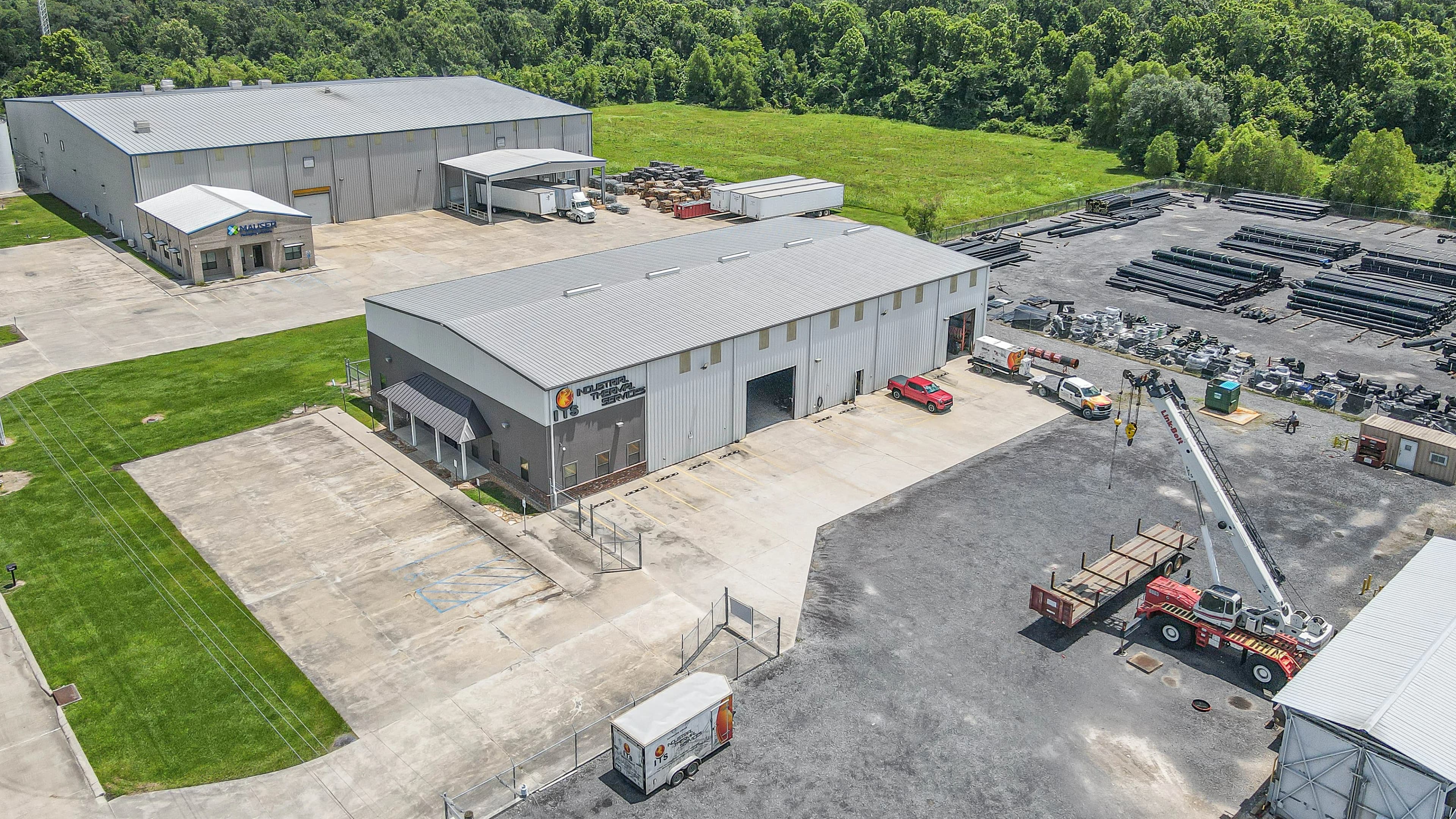
IOS (Industrial Outdoor Storage) yards along Hwy 30 in Ascension Parish are the closest practical absorption point for that displaced demand. Fenced, paved, or compacted gravel yards with secured access, proximity to the River Road industrial corridor, and flexible lease structures are not a commodity product in this market. When contractor demand spikes, options narrow quickly. The Geismar Laydown facility's 29 acres and the Arrowhead Laydown facility's 20-plus acres represent the type of immediately available, purpose-configured IOS capacity that construction surge demand targets first.
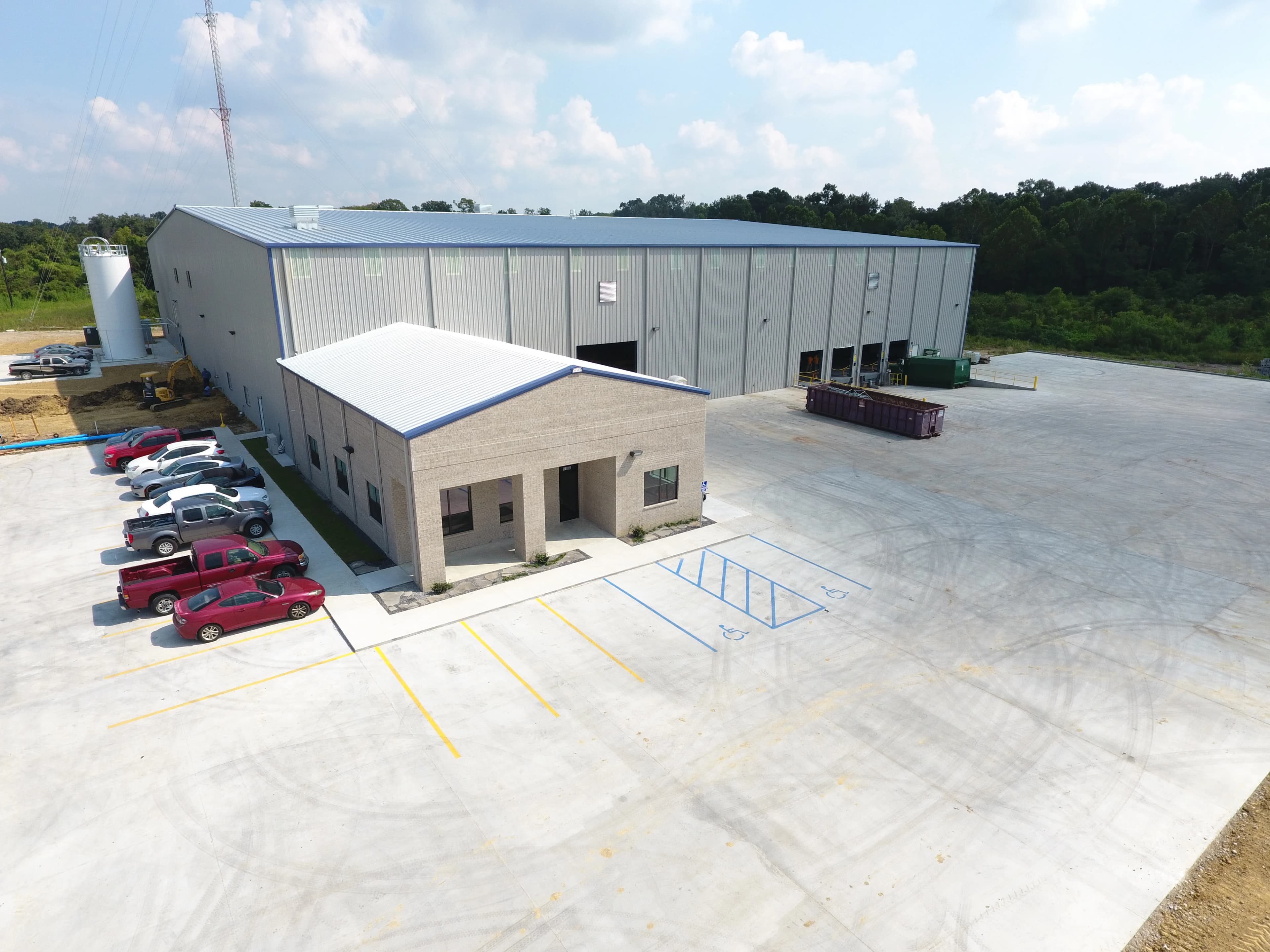
Flex warehouse space compounds that demand. Contractors mobilizing nested operations at a heavy-process site need covered space for prefabrication, equipment storage, and material staging alongside their outdoor yards. Small-bay industrial buildings in the 5,000 to 15,000 square foot range, with grade-level and dock access, fill that role. Vacancy in that product type along the Hwy 73 and Hwy 30 corridors tightens measurably during active construction cycles.
The State Incentive Structure Adds Duration, Not Just Scale
Louisiana's incentive package to secure this project includes a $23.5 million performance-based grant tied to equipment investments and infrastructure improvements. Shintech is also expected to apply for the Quality Jobs program and file for a property tax abatement through the Industrial Tax Exemption Program (ITEP). LED FastStart is on the table for workforce training.
These are not symbolic gestures. Quality Jobs cash rebates are tied to payroll performance over time, which means the company has a structural incentive to sustain and grow its Louisiana workforce rather than peak and retreat. ITEP abatements extend over multi-year periods and are linked to capital investment benchmarks. Together, these mechanisms anchor the project to a long operational timeline. That matters for real estate planning because it means contractor demand will not compress into a single two-year window. It will build through the late 2020s and support steady absorption of industrial space throughout that cycle.
Nationally, industrial tenants leased 533.2 million square feet of warehouse and logistics space in 2025, an 8.4% year-over-year increase, with industrial investment transaction volumes reaching $91.3 billion. The Gulf South, and Ascension Parish specifically, is positioned to outperform those national averages during an active petrochemical construction cycle. Local supply of IOS and flex product is structurally constrained relative to demand, which is a fundamentally different condition than the oversupply correction playing out in large-format speculative markets nationally.
Frequently Asked Questions
Q: How does Shintech's Iberville Parish expansion affect industrial space demand in Geismar specifically?
Contractor crews supporting a multi-year heavy-construction project need staging yards, equipment storage, and flex warehouse space within a practical daily drive of the site. Geismar's Hwy 30 corridor is the nearest established industrial submarket with available IOS and small-bay flex inventory, making it the primary absorption zone for contractor spillover demand generated by the Shintech buildout.
Q: What type of industrial space do nested contractors typically require during a major plant expansion?
Nested contractors generally need a combination of outdoor laydown or storage yard (fenced, with heavy vehicle access) and covered warehouse space for prefabrication, tool storage, and material staging. Lease flexibility is important because project timelines shift. IOS yards in the 5-to-30-acre range and flex buildings from 5,000 to 20,000 square feet are the most sought-after formats during active construction cycles.
Q: How long will contractor demand from the Shintech expansion remain elevated?
Shintech's first phase is targeted for completion in 2030, and the state incentive structure (Quality Jobs, ITEP) creates financial incentives to sustain Louisiana operations well beyond initial construction. Based on the company's prior project history, peak nested contractor demand typically persists through the full construction window, with some positions converting to long-term maintenance contractor roles post-completion. Active demand pressure on IOS and flex space in this corridor should be expected through at least the late 2020s.
Talon Industrial develops and leases IOS yards and flex warehouse space along the Geismar industrial corridor, positioned directly in the path of this demand cycle. Contact us here to discuss available inventory.