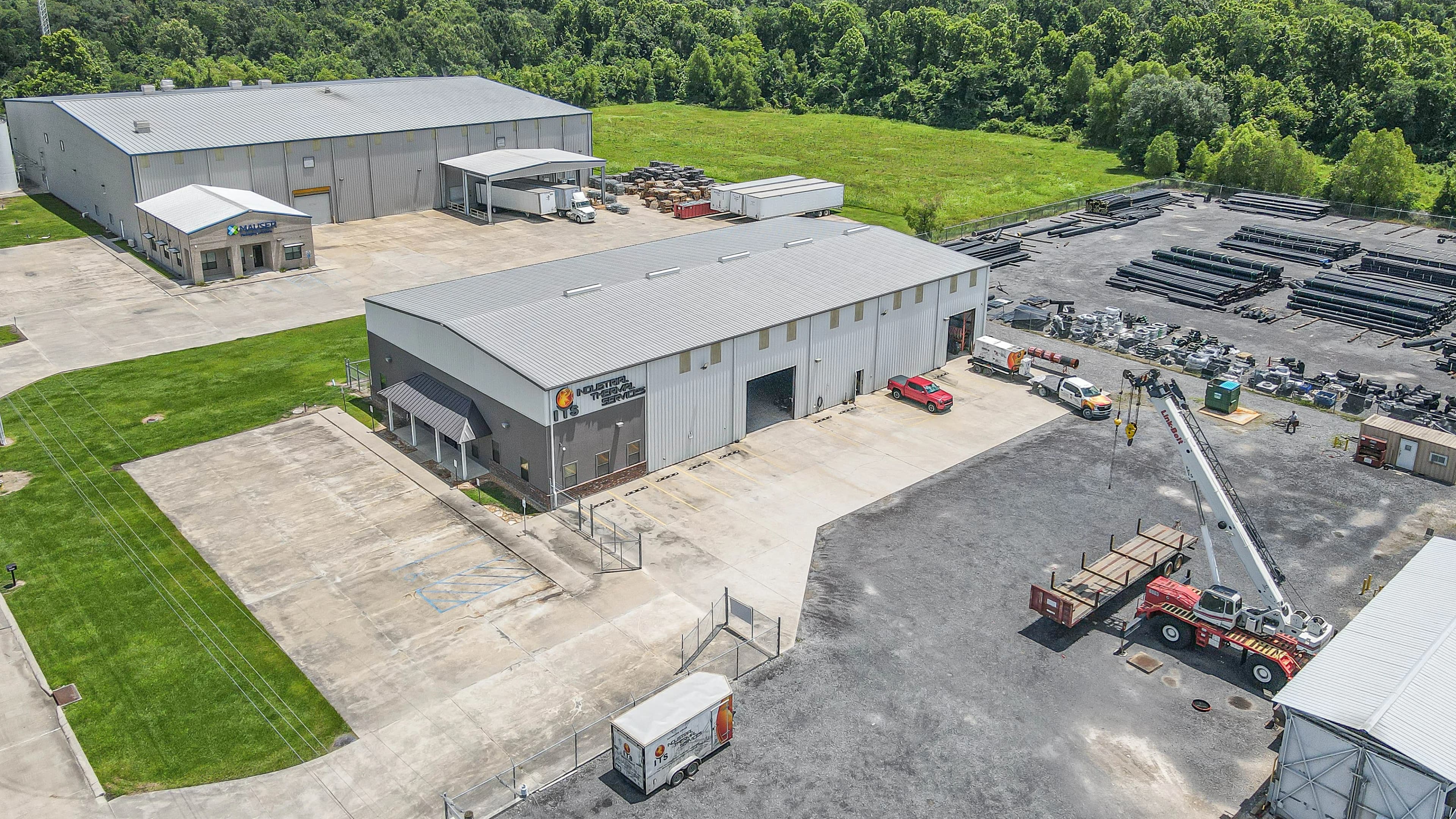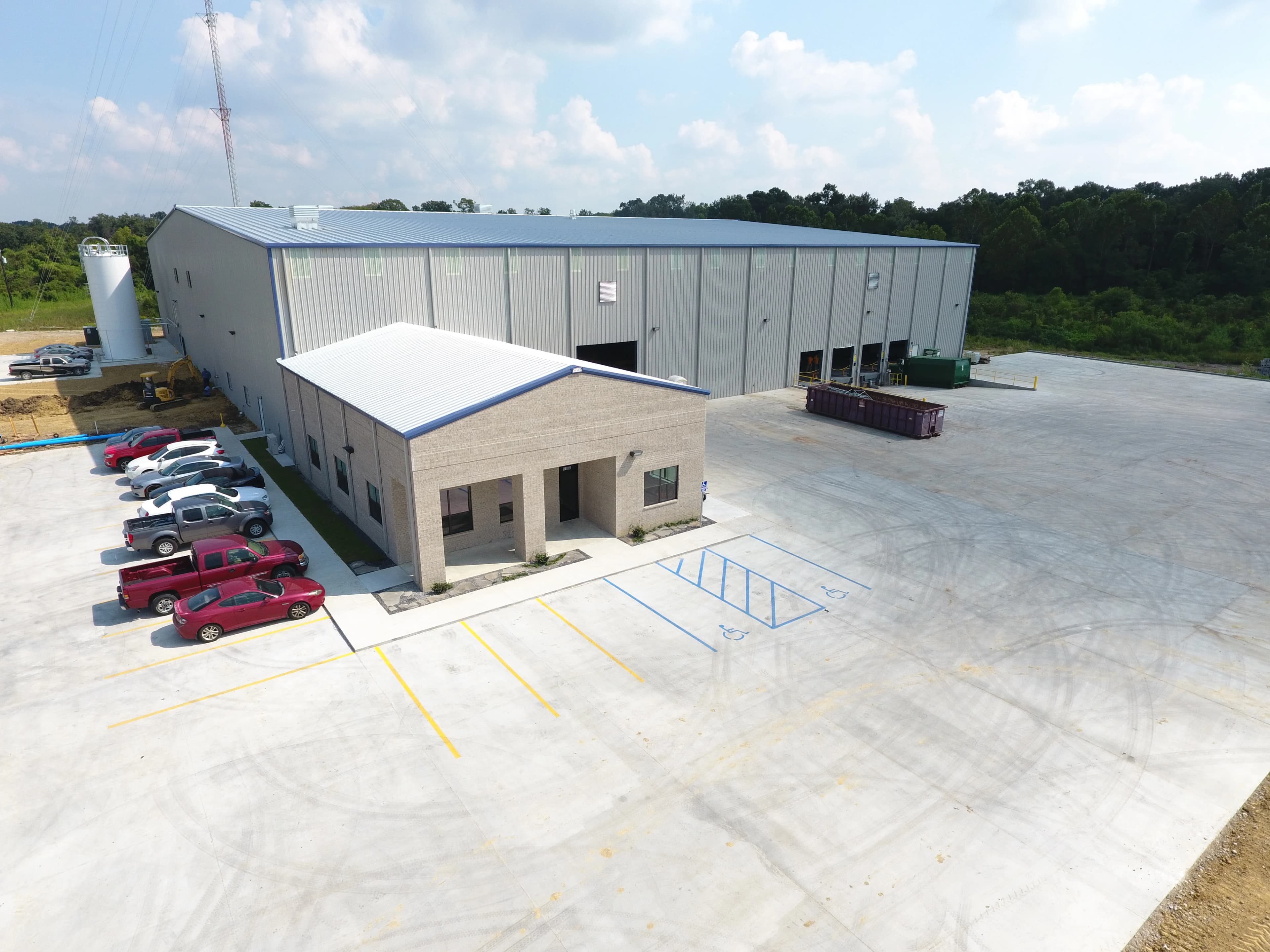

Louisiana's Industrial Ad Valorem Tax Exemption Program just got more powerful, and paired with the permanent 100% federal bonus depreciation restored under the One Big Beautiful Budget Act, the combined incentive structure may be the most compelling capital deployment case the Geismar corridor has seen in a generation.
For plant managers, investors, and the industrial service companies that follow major manufacturers into this corridor, understanding how these two programs stack is no longer optional. It's a competitive necessity.
Governor Landry's ITEP Reset Changed the Math
On February 21, 2024, Governor Jeff Landry signed Executive Order No. JML 24-23 at the Louisiana Association of Business and Industry Annual Meeting in Baton Rouge, and the signal was unmistakable. The Landry administration was recommitting to ITEP as Louisiana's primary economic development weapon.
The mechanics matter here. ITEP delivers an 80% property tax abatement for up to 10 years on qualifying new capital investments. For mega-projects clearing the $500 million capital expenditure threshold, that abatement can climb to 93–100% with Board of Commerce & Industry and Governor's approval. In a state where property tax exposure on heavy industrial assets can be substantial, that's a decade-long cost advantage that flows directly to the bottom line.
But the structural change that deserves more attention than it's received: Landry's order eliminated the job creation and retention requirements that had previously conditioned ITEP eligibility. New 2025 ITEP Rules — governing project applications filed on or after March 20, 2025 — confirm no jobs or payroll thresholds to meet. Companies with ITEP contracts under the 2017 and 2018 rules can now opt out of those compliance components entirely by amending their contracts.
The practical effect is significant. Capital-intensive projects that deploy automation, advanced processing systems, or modular construction (investments that generate economic value without adding large headcounts) now access the same abatement as traditional labor-heavy expansions. That's a major shift for the petrochemical and chemical manufacturing sectors that dominate Ascension Parish.
Sharon Roberts of Ryan noted it plainly: ITEP is "Louisiana's most important economic development tool for stimulating major capital investments." The Landry reforms restored that tool to full effectiveness after years of policy drift.
Federal Bonus Depreciation: The Other Half of the Stack
While ITEP attacks the property tax burden on the state side, permanent 100% federal bonus depreciation (restored under the OBBBA) addresses the federal income tax exposure on capital investment. The mechanics: qualifying assets placed in service can be fully expensed in year one rather than depreciated over 15, 20, or 39 years under standard MACRS schedules.
For an industrial developer or manufacturer placing $50 million in new equipment, process systems, or facility improvements into service in Geismar, the immediate deduction against taxable income is transformative for IRR calculations. Combined with ITEP's decade of property tax relief, the two programs effectively compress the payback period on major capital deployments.
This is why the Geismar corridor is attracting serious capital conversations right now. BASF (whose Geismar site is the largest private employer in Ascension Parish, with approximately 3,000 employees and contract workers on-site) has invested more than $1 billion in new projects at that location since 2009. That investment history didn't happen by accident. It happened because the incentive stack made Louisiana the rational choice over competing Gulf Coast and international sites.
What This Means for Industrial Space Demand in Ascension Parish
Major manufacturers don't expand in isolation. Every large capital project at a Dow, Shintech, CF Industries, or Westlake facility generates a downstream wave of demand from contractors, maintenance service providers, equipment suppliers, and logistics operators, and all of them need industrial space near the plant gate.
The double-stack incentive environment accelerates that dynamic. When ITEP and bonus depreciation make a $200 million plant expansion financially compelling, the announcement triggers immediate demand for nearby warehouse space, IOS yards, contractor staging areas, and short-term storage. That demand doesn't wait for the ribbon-cutting.
The national industrial market context reinforces this. U.S. industrial tenants leased 533.2 million square feet in 2025 (up 8.4% year-over-year) with third-party logistics providers accounting for roughly 35% of that activity. The flight-to-quality trend is equally relevant locally: buildings constructed before 2000 logged more than 100 million square feet of negative absorption nationally in 2024, while post-2022 construction posted over 200 million square feet of positive absorption. Tenants in Louisiana's industrial corridor are making the same calculation (modern, purpose-built facilities near active plant complexes command premiums and hold occupancy).
The streamlined ITEP approval timeline (local committee input now consolidated to a 45-day window) means capital deployment decisions are moving faster. Developers and tenants who are already positioned in the corridor when an announcement drops are the ones capturing that early-cycle demand.
The Investment Case for the Corridor Right Now
The layered structure of ITEP plus permanent bonus depreciation creates a window that sophisticated industrial investors should be evaluating aggressively. Louisiana's tax system is not inherently competitive (ITEP exists precisely because it offsets that structural disadvantage). But when ITEP is fully operational and federal bonus depreciation is permanent, the combined after-tax economics of owning or leasing industrial assets in Geismar are genuinely compelling.
For tenants already operating in this corridor, the implication is different but equally urgent: the companies that secure space near active capital projects (whether through long-term leases on industrial warehouses or IOS yard agreements in Ascension Parish) capture the logistics and service contract opportunities that follow major plant investment. Proximity to the capital is the asset.
The incentive stack is real. The demand cycle is early. The corridor is the place to be positioned.
Frequently Asked Questions
Q: Does Louisiana's ITEP apply to industrial service companies that support petrochemical plants, or only to the manufacturers themselves?
ITEP is structured for manufacturers making new capital investments in Louisiana (the direct incentive flows to the qualifying manufacturing entity). However, the demand effect on industrial real estate is corridor-wide. When a major manufacturer secures ITEP on a plant expansion, the industrial service companies, contractors, and logistics operators supporting that project drive secondary demand for nearby warehouse and IOS space that benefits the entire market.
Q: How does permanent federal bonus depreciation interact with ITEP from a financial modeling standpoint?
The two programs attack different cost centers. ITEP reduces ongoing property tax liability over a 10-year horizon (a recurring cash flow benefit). Federal bonus depreciation accelerates the tax shield on capital expenditures into year one, improving IRR and reducing payback periods. Modeled together on a major industrial investment, the combined effect can substantially change the risk-adjusted return profile compared to competing locations that offer neither.
Q: Are there specific asset types in the Geismar area that benefit most from this incentive environment?
Purpose-built industrial facilities (warehouses with heavy power, crane-served bays, and secured IOS yards) positioned near active plant campuses are the direct beneficiaries of expanded capital investment in the corridor. When manufacturers accelerate expansion timelines due to favorable incentives, demand for contractor staging, equipment storage, and industrial services space near the plant gate tightens quickly.
Talon Industrial develops warehouse, IOS, and industrial park facilities across Louisiana's petrochemical corridor — reach out to discuss available space.